Jordy Albert Bish

Benefits
Specifications
How-to
Contact Us
Learn More

Moca Wallet Integration
A compliant, scalable integration for Vietnam’s drivers between Grab’s Cash Wallet and Moca Wallet.
8 min read • 2021
Context
Financial Inclusion and Faster Access to Earnings
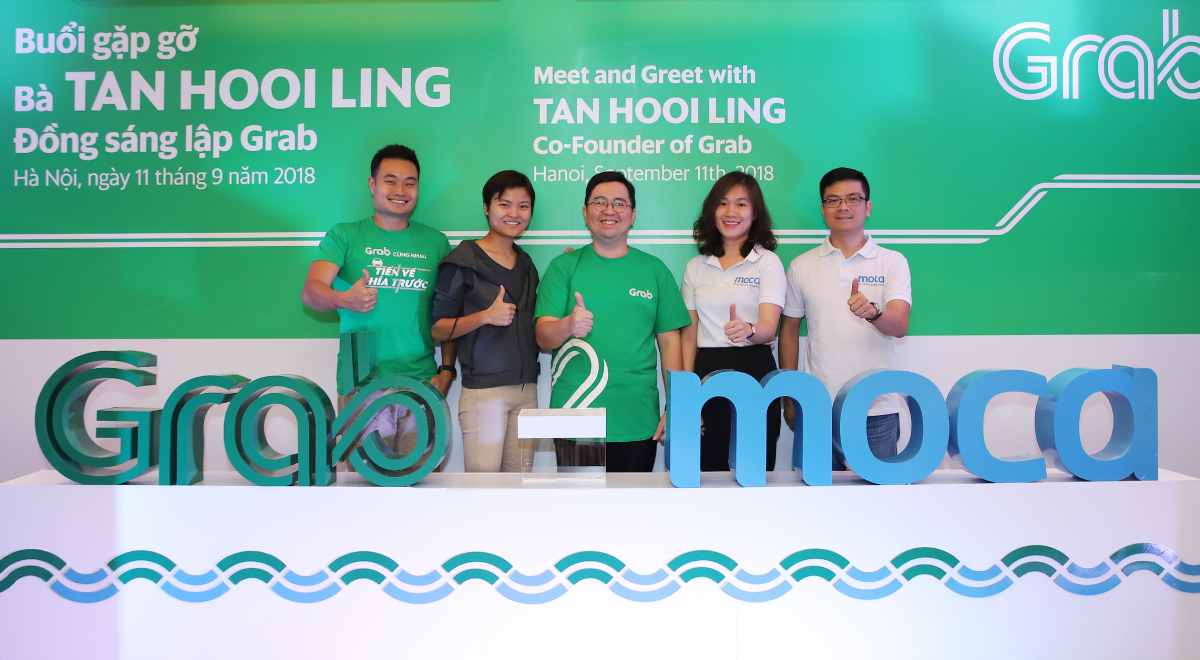
As a Product Designer for the Wallet Platform within the Grab Finance Group, I led the design efforts to enable drivers in Vietnam to link their Moca Wallet directly to their Grab Cash Wallet. This strategic project aimed to create a compliant and scalable integration designed to unlock instant cash-outs, seamless spending, and access to financial services for a fleet serving 2.2 million passengers each day.
Prior to this integration, driver earnings were effectively trapped in slow, manual cash-out cycles, where funds were held in non-regulated accounts that limited access to modern digital services
The Team
My Role
I served as the Lead Product Designer for the Wallet Platform team, overseeing the project from its inception through to the pilot and regional scaling phases. My role involved:
Cross-functional Leadership
Collaborating closely with Compliance, Legal, and Engineering teams to transform strict regulatory requirements into design enablers.
End-to-End Design
Designing the wallet activation flows for both existing and new Moca users, ensuring a frictionless transition into the regulated Moca ecosystem.
Validation
Directing controlled lab studies in Ho Chi Minh and overseeing a large-scale in-market A/B test with 160,000 drivers to prove the design's impact.
The Problem
Friction, Delays, and Missed Opportunities on Both Sides
The existing system presented significant friction and missed opportunities for both drivers and the Grab platform. Prior to this integration, the driver wallet functioned merely as a passive payout channel rather than an active financial gateway, limiting liquidity and engagement within the ecosystem
Trapped and Delayed Access to Earnings
Drivers received their earnings in Grab’s internal, non-regulated Cash Wallet. To access their money, they had to manually cash out to external bank accounts and wait for transfers to clear. As a result, 75% of drivers waited up to two days to receive their funds
Excluded from Financial Services
Because the Cash Wallet wasn’t a licensed financial instrument under the State Bank of Vietnam (SBV), Grab could not offer services, such as loans, insurance, and BNPL directly through them. This restricted drivers' access to credit and digital financial safety nets
Friction in Digital Payments
Drivers were unable to spend their earnings directly via Moca. Even for basic needs like airtime top-ups or bill payments, they were forced into an inconvenient manual top-up cycle from their bank accounts back into a digital wallet, creating a significant barrier to digital adoption
Earnings Leakage
Once earnings were cashed out to external banks, all subsequent revenue and engagement moved outside of the platform. Instead of generating recurring value within Grab’s ecosystem, this spending circulated externally, reducing driver loyalty and platform retention.
Goals
Unlocking Instant Liquidity and Financial Services Eligibility
The integration was designed to deliver immediate, measurable value to drivers while establishing a strong foundation for Grab’s financial ecosystem in Vietnam. The strategic intent was to transition driver wallets from passive payout channels into active financial gateways, improving liquidity and long-term engagement
Customer Value Proposition (CVP)
Making Driver Earnings Fast, Flexible, and Rewarding
Instant Liquidity
Deliver near-instant transfers from the Driver Wallet to Moca, eliminating the traditional 1–2 day bank wait that previously hindered driver cash flow.
Access to Financial Services
Enable drivers to link or create a (regulated) Moca Wallet directly in-app, granting them compliant access to Grab Financial Services including loans, insurance, and PayLater.
Seamless Payments & Rewards
Allow drivers to use their hard-earned money immediately for online and offline purchases, bill payments, and airtime top-ups, while earning GrabRewards on every transaction.
Business & Product Objectives
Increase Activation & TPV
Driving wallet link rates, cash-outs transactions, and the Total Payment Volume (TPV) through Moca-integrated payment options.
Ecosystem Retention
(Closed-Loop Value)
Strategically retain driver spending within the Grab ecosystem to generate recurring value and reduce "earnings leakage" to external banks.
Validation
Establish a secure, scalable integration model approved by the State Bank of Vietnam (SBV) that could serve as a for other regulated markets, such as Indonesia.
Process & Approach
Designing Within Bounds: Driving Instant Payouts through Strategic Internal Transfers
This project sat in a heavily regulated space, so compliance wasn’t something we could “design around.” Instead of treating regulation as a blocker, we treated it as a given constraint and designed within it from day one.
That meant focusing early on clarity, predictability, and validation with real users. By being explicit about what was allowed, what wasn’t, and why, we were able to reduce uncertainty and build trust, both with users and internal stakeholders. In the end, regulation didn’t just shape the solution; it helped us create a more reliable and trustworthy product.
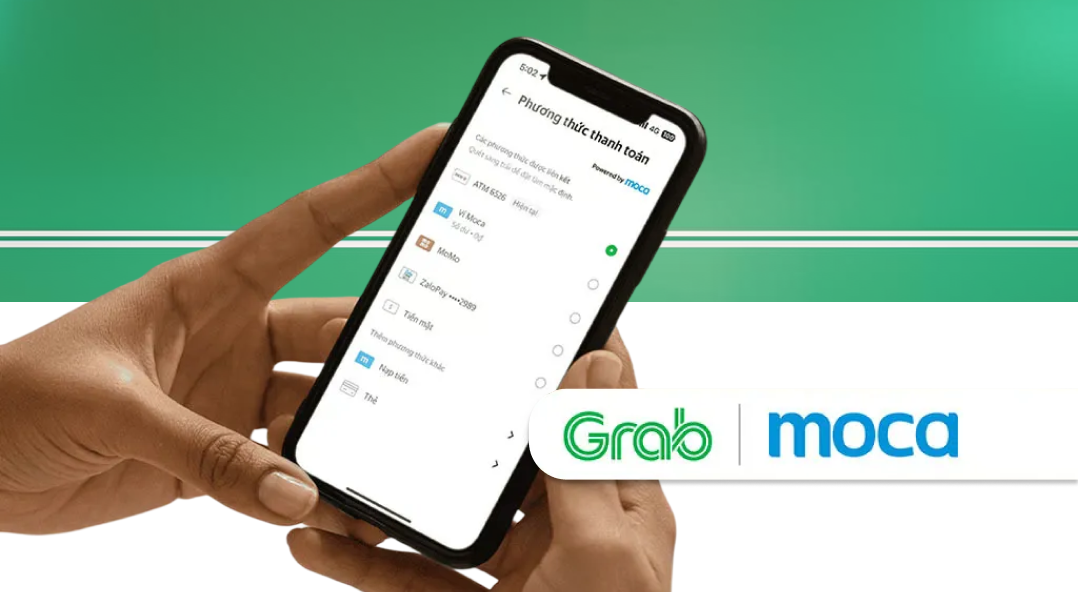
Enabling the Integration
Partnership as an Enabler
Early and constant collaboration with Compliance and Legal teams was essential. By co-creating the integration from the start, we transformed traditional regulatory challenges into enablers, which significantly accelerated internal approvals.
Regulatory Positioning
To ensure a secure and compliant launch, the integration was positioned as an internal transfer within the licensed Grab–Moca ecosystem (treating them as one licensed entity). This strategy allowed the State Bank of Vietnam (SBV) to approve the project as a low-risk pilot that directly supported the national initiative to transition from cash to digital payments
Compliance-Led Consent Design
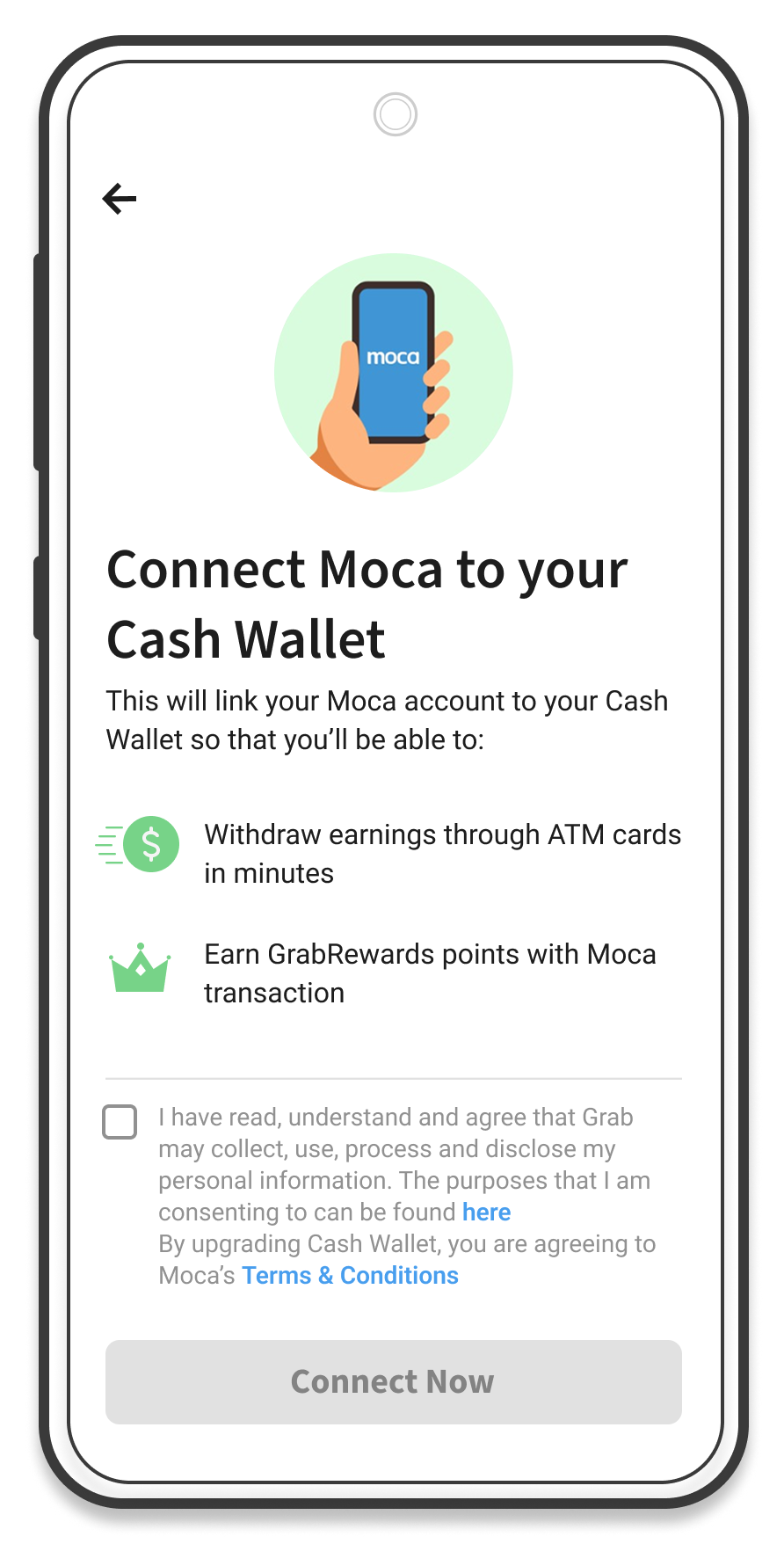
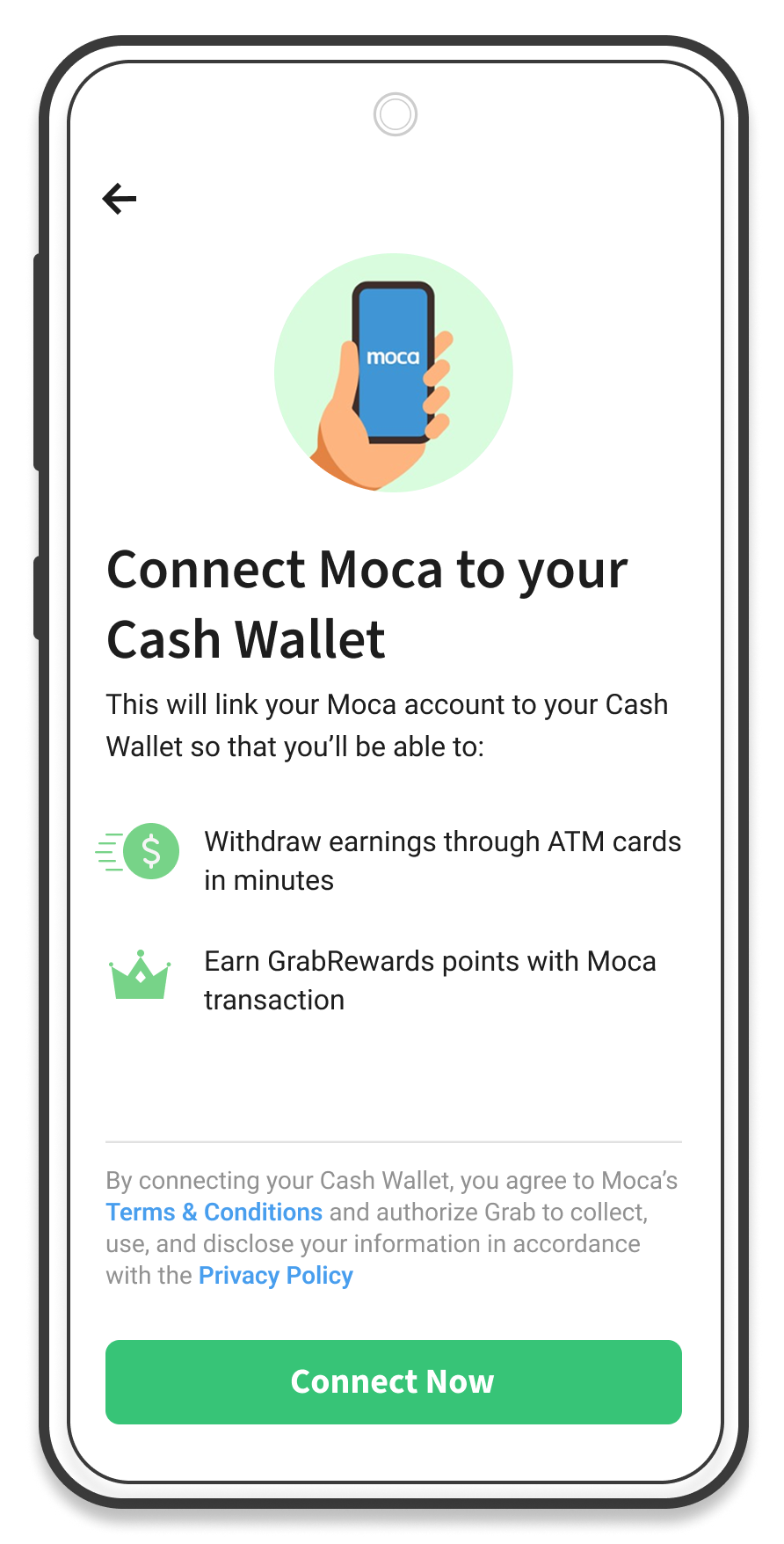
We worked closely with Data Privacy teams to design a consent flow fully aligned with local data protection regulations. We explored multiple options for each step of the onboarding process to balance strict legal requirements with the need to minimize friction for the driver.
Option A
Drivers are required to actively review and accept the Terms & Conditions before proceeding. This approach ensures explicit, informed consent, but introduces additional friction that can impact activation rates.
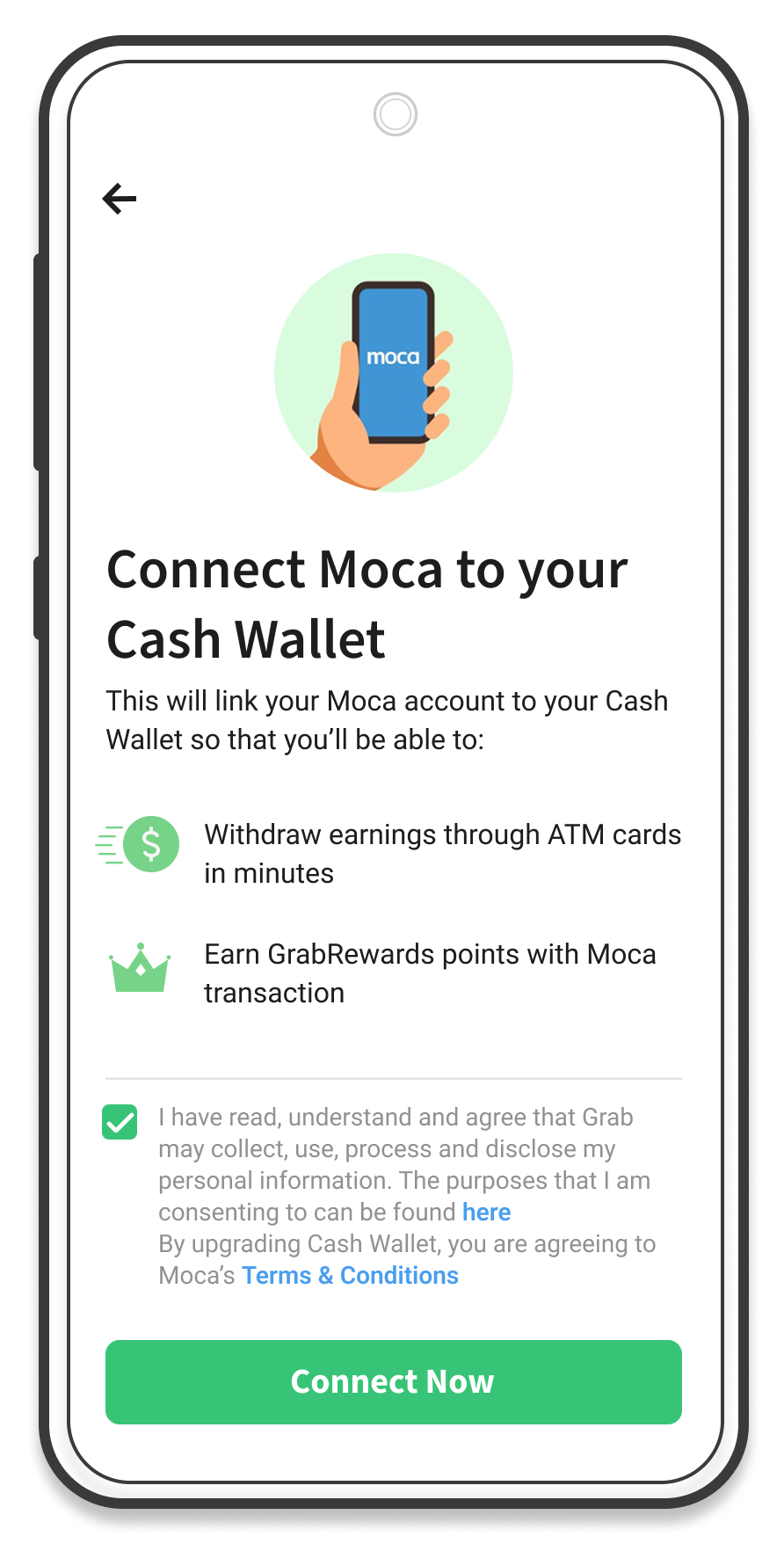
Option B
The T&C checkbox is pre-selected, allowing drivers to proceed faster while still surfacing consent clearly. This balances regulatory compliance with reduced friction, improving completion without fully removing user acknowledgment.
Option C
Consent is embedded directly into the “Connect Now” action, with Terms & Conditions referenced inline. Minimizing friction maximizes conversion, but consent is no longer explicitly confirmed.
Design Principles

Transparent by Design
Trust is the foundation of any financial product. We used straightforward language, clear progress indicators, and transparent updates on verification steps to ensure drivers felt informed and confident that their information was protected at every stage.

Frictionless for All
High adoption rates begin with simplicity. We focused on reducing cognitive load by eliminating unnecessary decisions and guiding drivers through the linking process with an intuitive, effortless flow regardless of their prior experience with digital wallets.

Adaptive Systems
We didn't just design for Vietnam; we designed for the region. By creating modular interaction patterns, we ensured the core experience remained consistent while allowing the system to adapt to the unique local regulations and partner needs of other markets, such as Indonesia
Frictionless Onboarding: Simplifying Complex Compliance
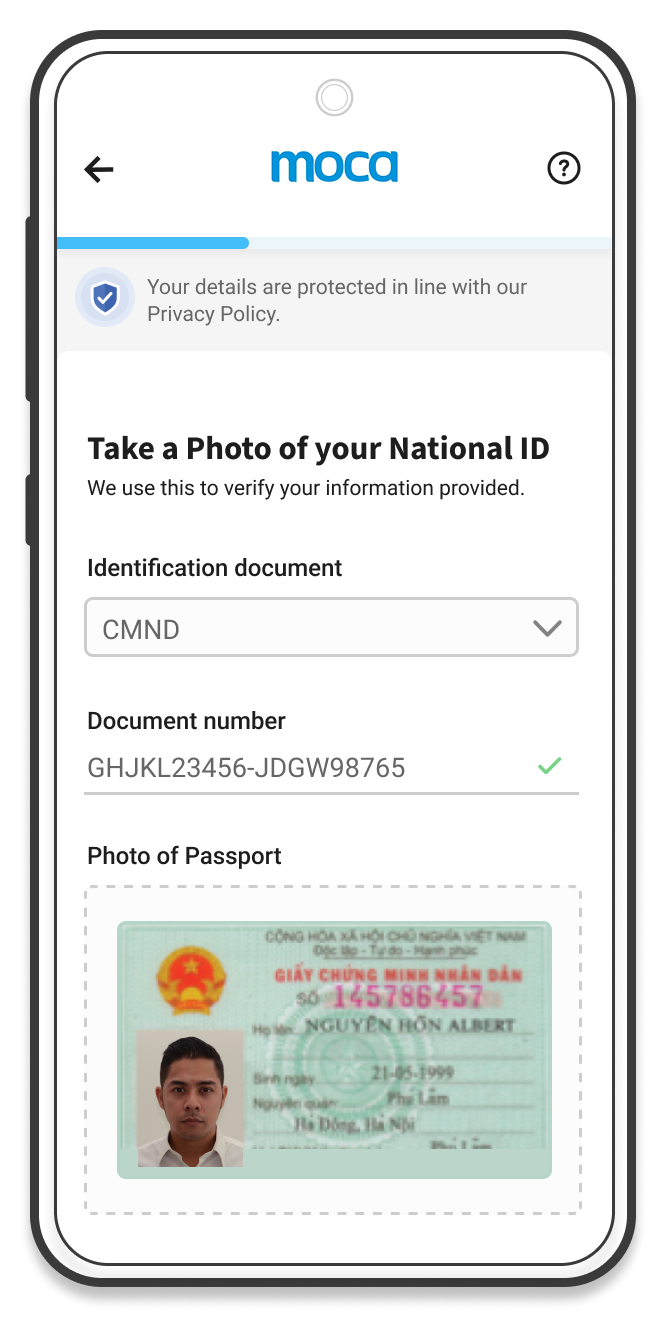
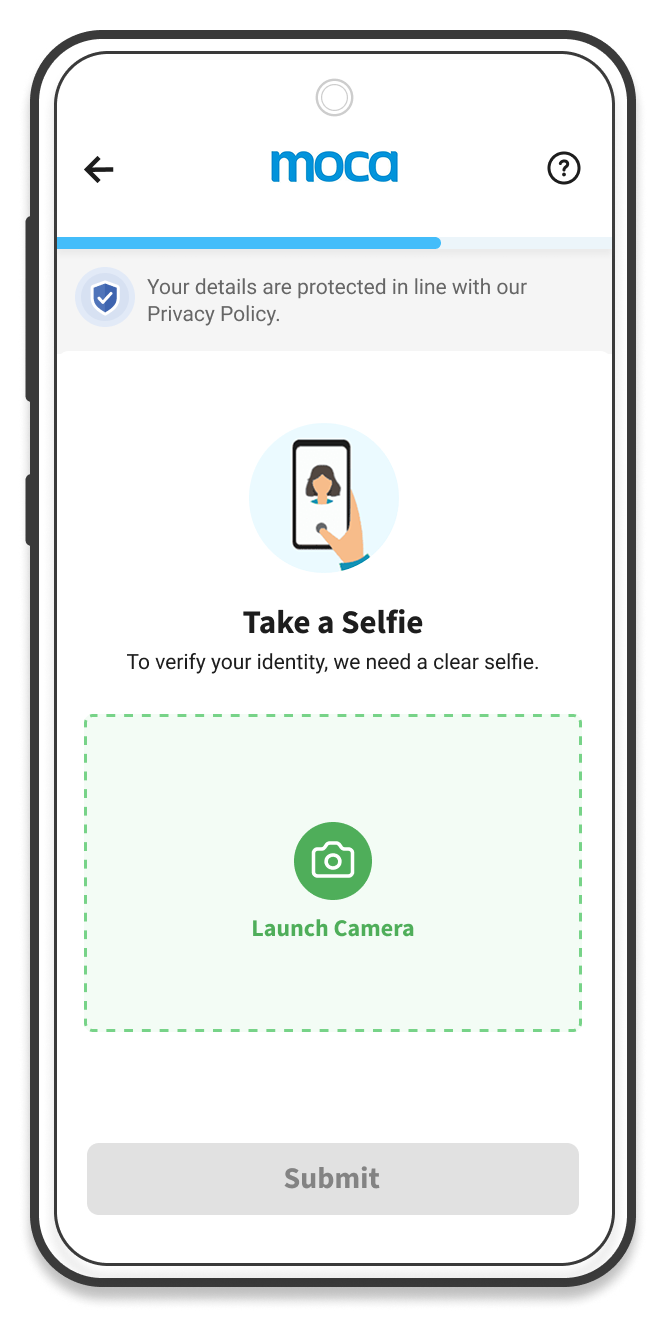
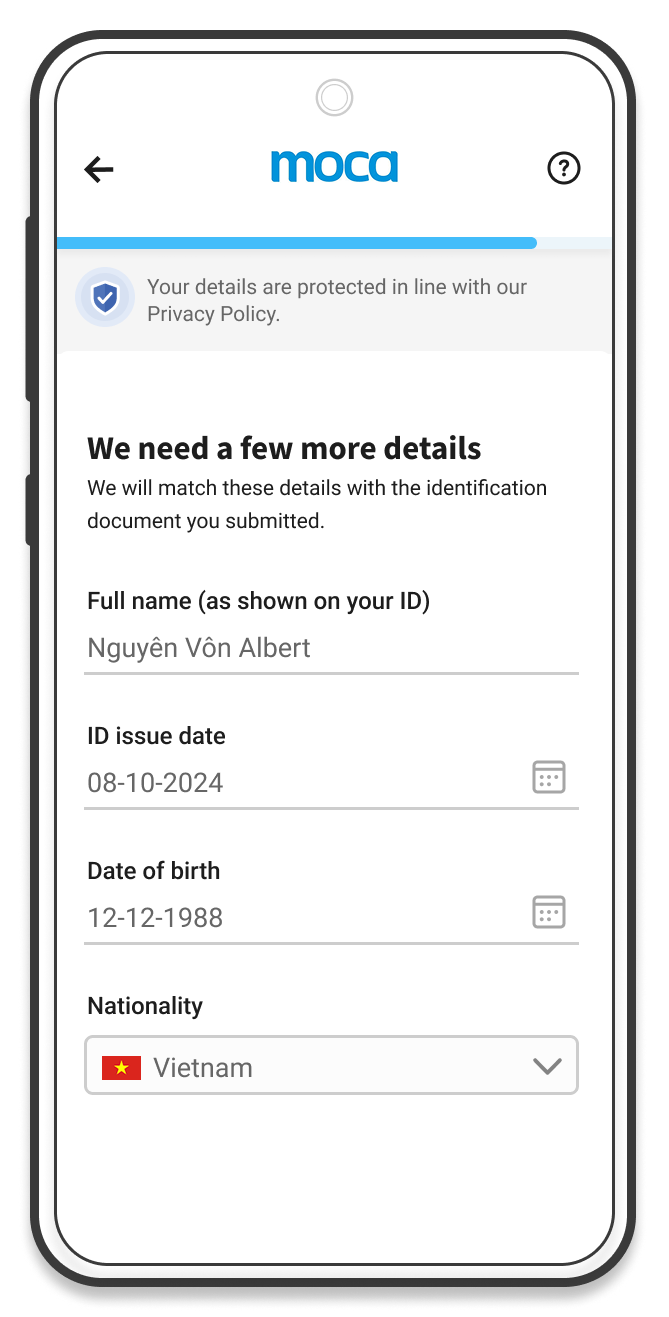
To address the diverse needs of the driver fleet, I designed detailed integration flows for two primary user states, ensuring that complex KYC (Know Your Customer) and CDD (Customer Due Diligence) requirements were met with minimal friction
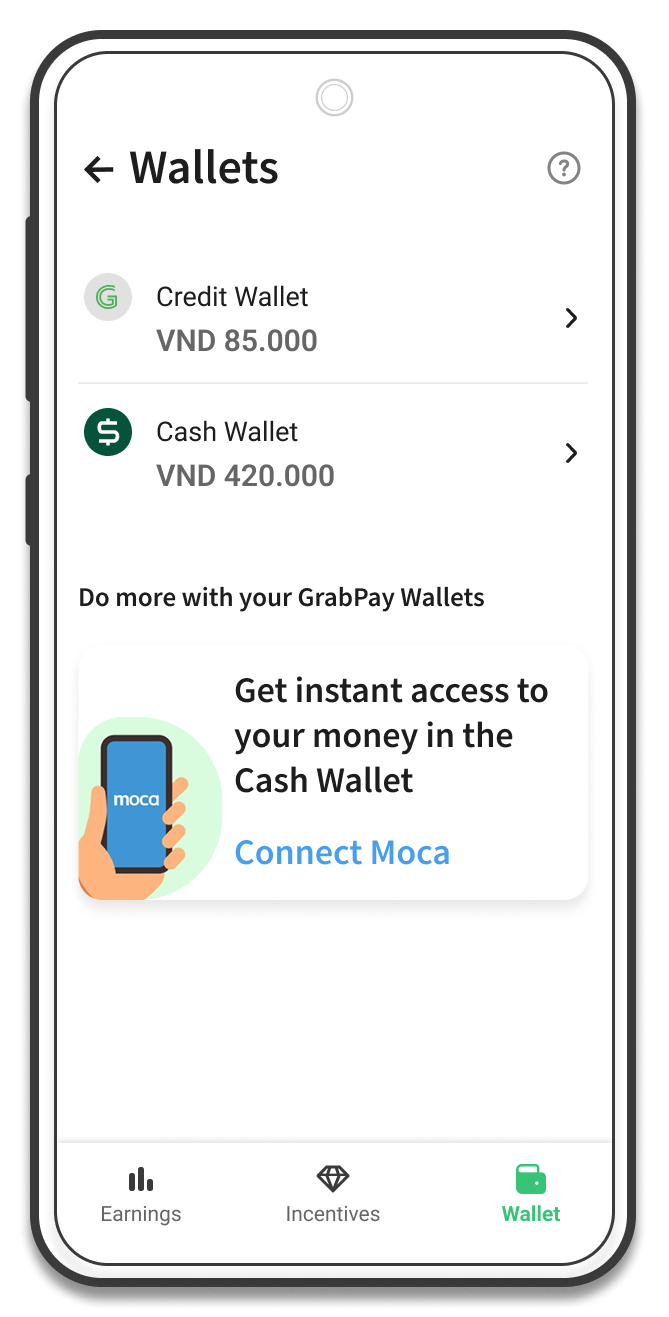
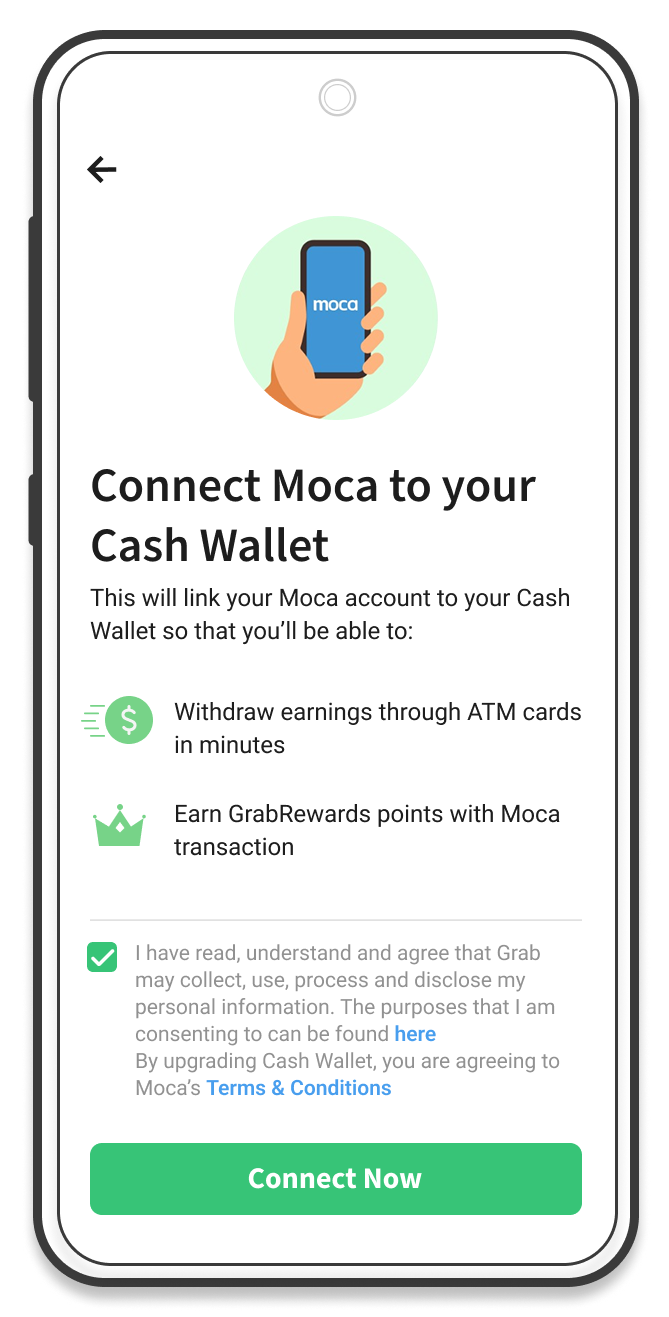
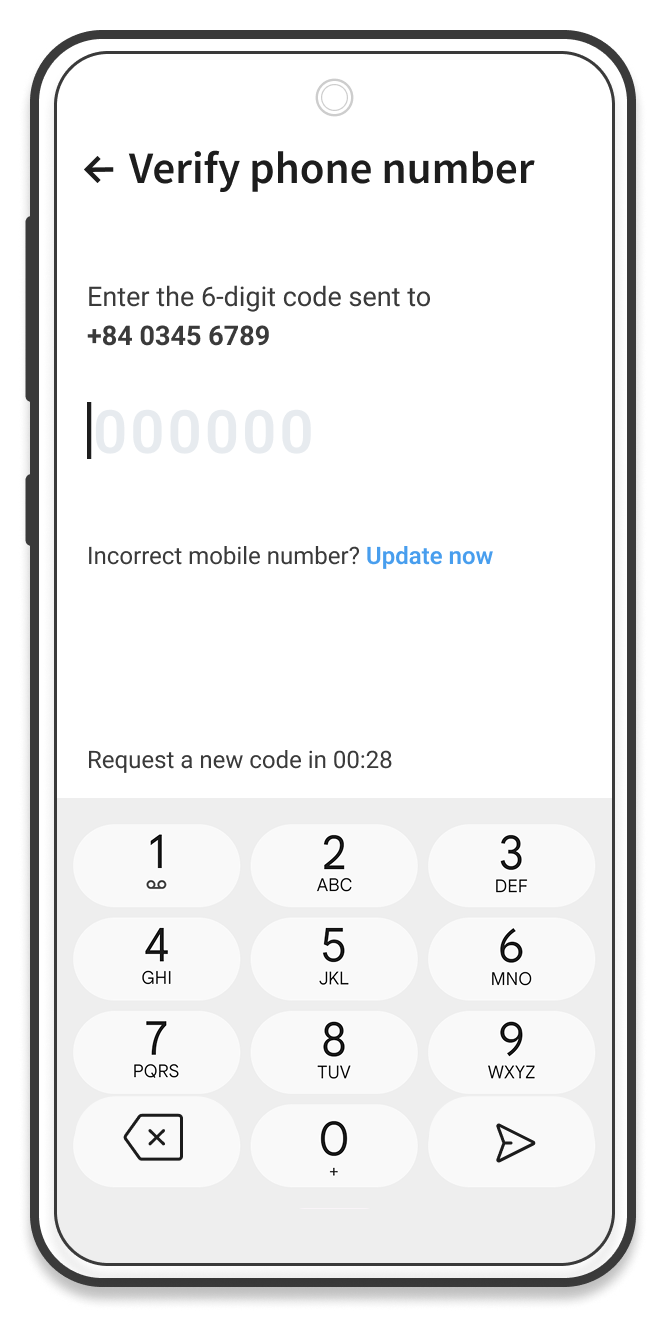
Existing Moca Customers
Drivers who already held full KYC status, were guided through a streamlined flow focussing on legal consent and security. This included accepting updated T&Cs, verifying their phone number via OTP, and providing final consent to link the accounts.
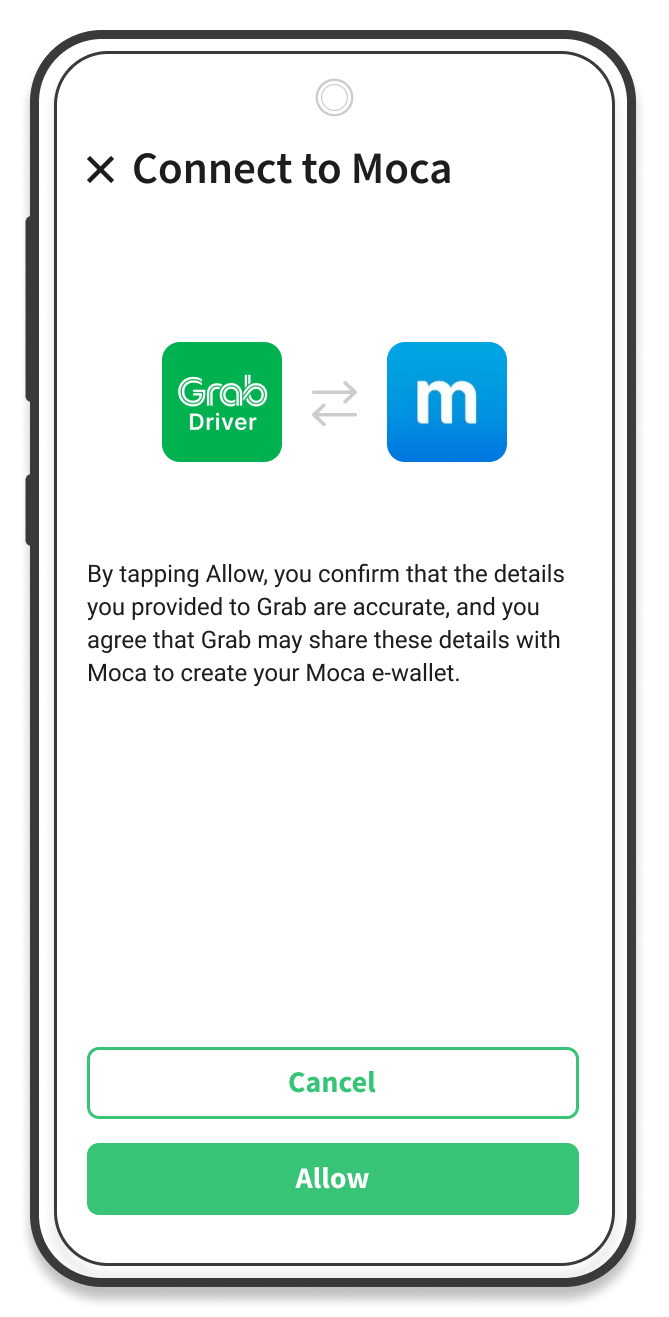
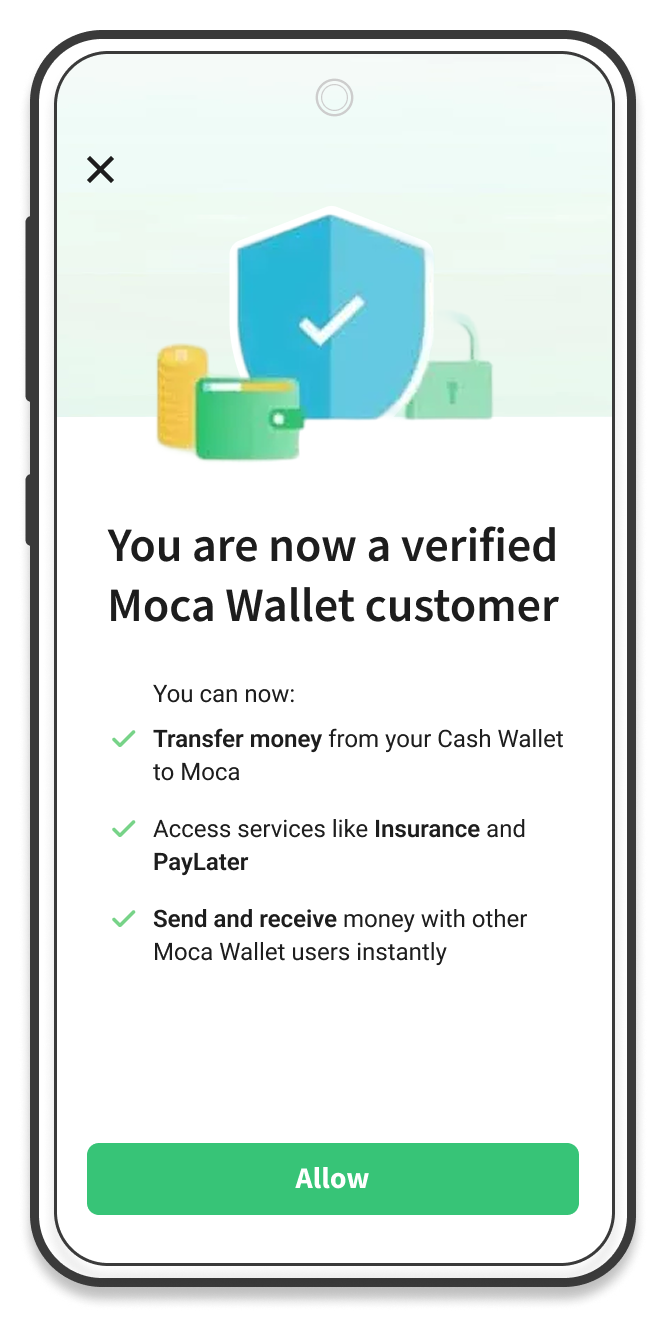
New Moca Customers
For new Moca users, the flow acted as a bridge to the regulated ecosystem. To reduce manual entry, we prefilled the KYC form using existing driver data pulled from Grab’s User Service. After accepting T&Cs and verifying their phone number, drivers consented to the link and connected an ATM card to fund their new Moca account.
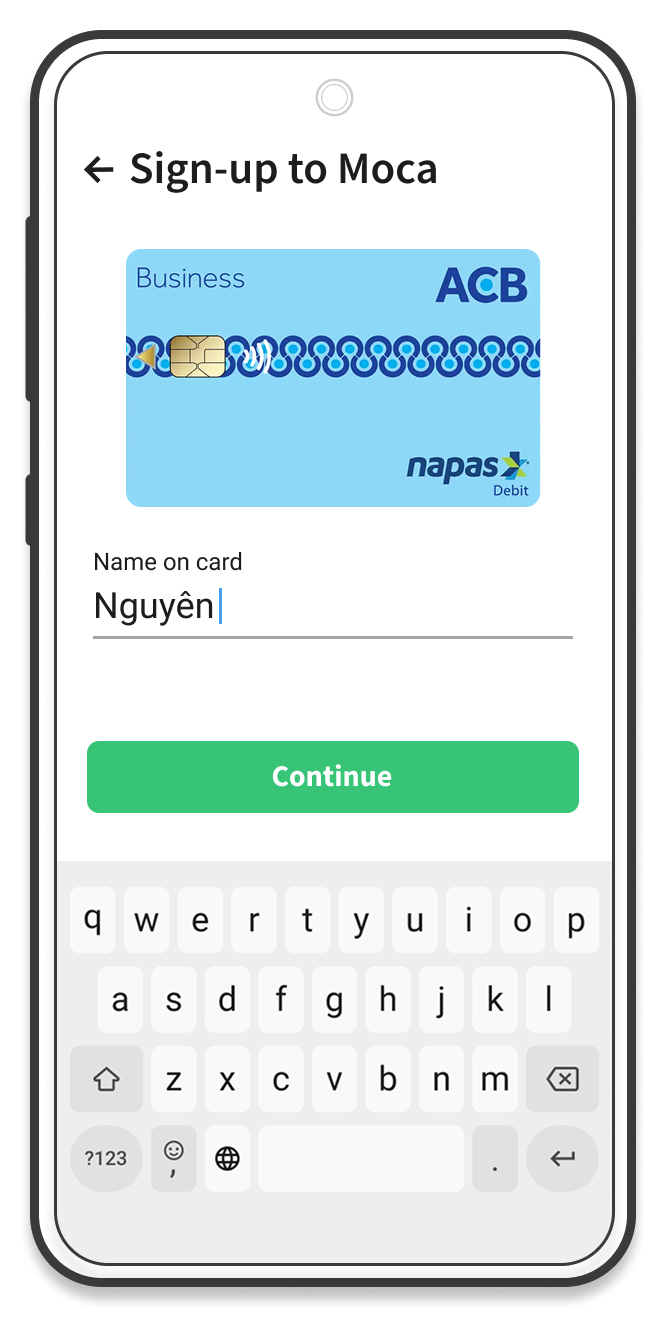
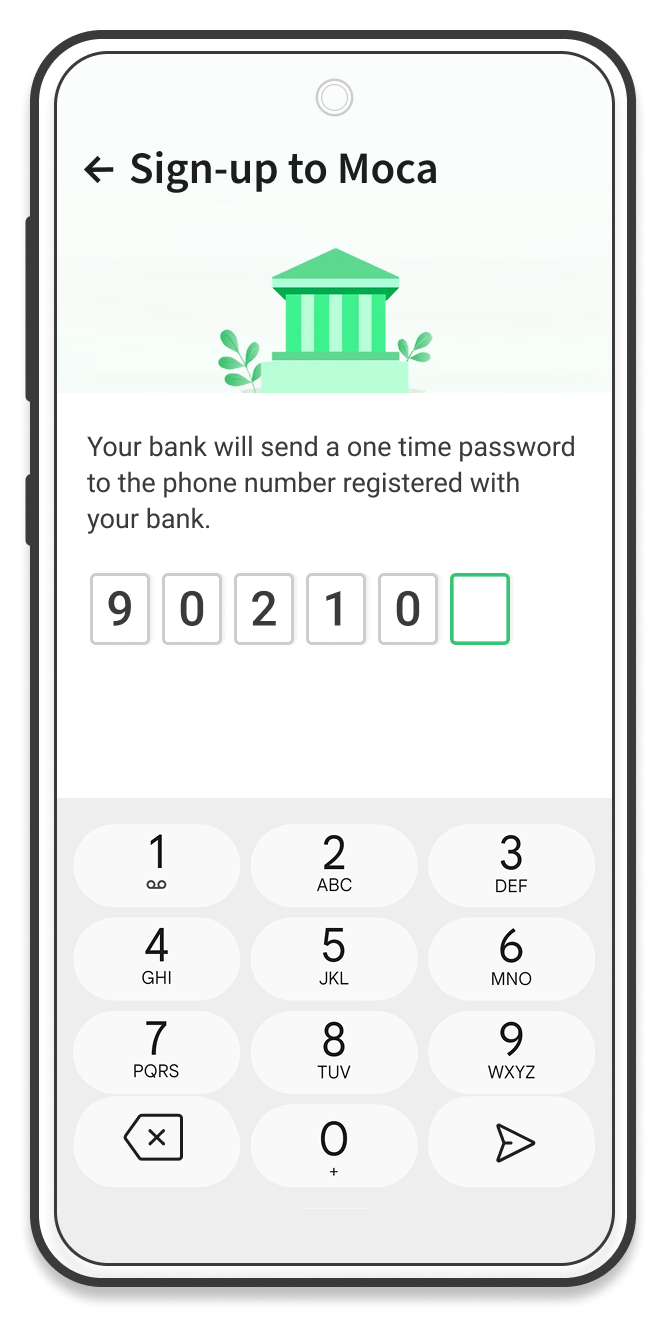
Validation
Usability Testing
Before launching, we conducted a controlled lab study in Ho Chi Minh, Vietnam, with 10 Grab Car and Bike drivers. To ensure high-quality insights, I observed sessions from a dedicated room with a simultaneous translator. The goal was to validate the clarity of the consent language and ensure the wallet-linking steps felt secure and predictable.


Key Findings & Iterations
Trust Through Branding
Drivers expressed significantly higher trust when flows featured bank branding and were reinforced by a "protected information" message.
Certainty Through Progress
The addition of a progress indicator was crucial. It made the multi-step linking process predictable, allowing drivers to estimate the effort required and reducing drop-off anxiety.
Clarity in Consent: Balancing Clarity With Compliance
In line with our “Transparent by Design” principle, we collaborated with Legal and Compliance to translate dense regulatory requirements into clear, human language. Making it easier for drivers to understand exactly what data they were sharing and why, turning a regulatory requirement into a moment of clarity and trust, rather than a source of confusion or friction.
In-Market Experimentation
To test the design’s impact on behavior, we ran an in-market A/B test with a stratified sample of 160,000 drivers over two months.
Test Group
Control Group
Experimental Design
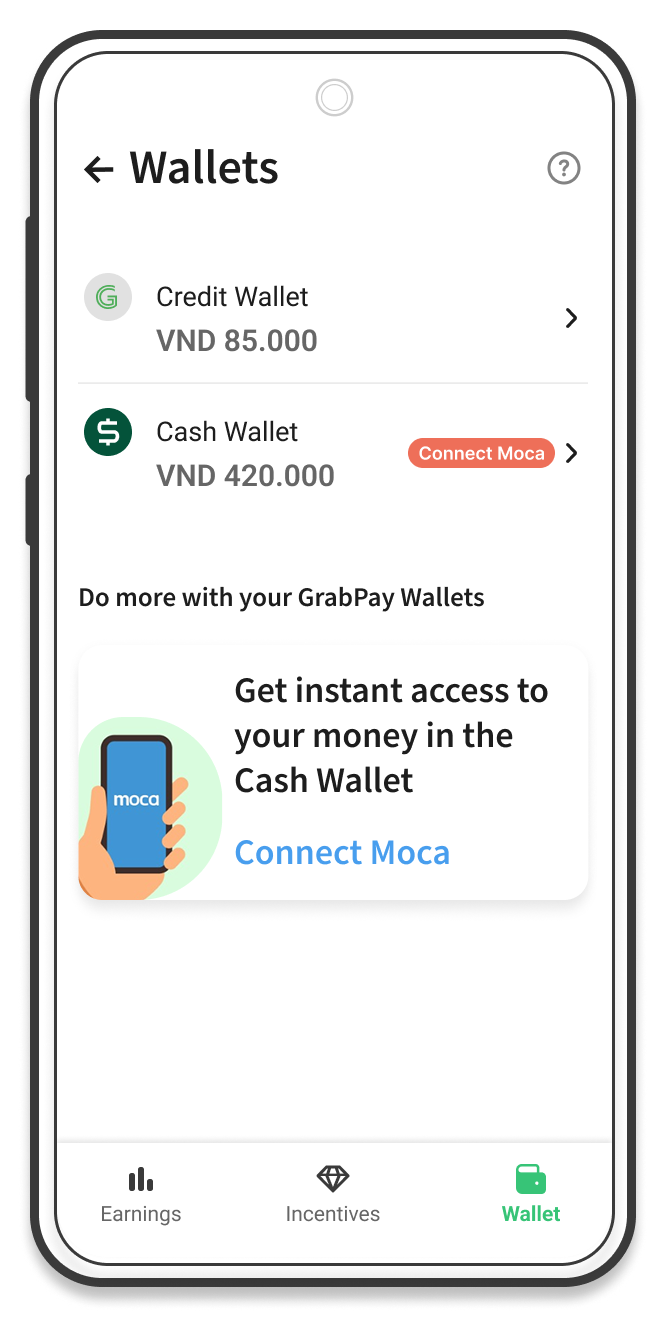
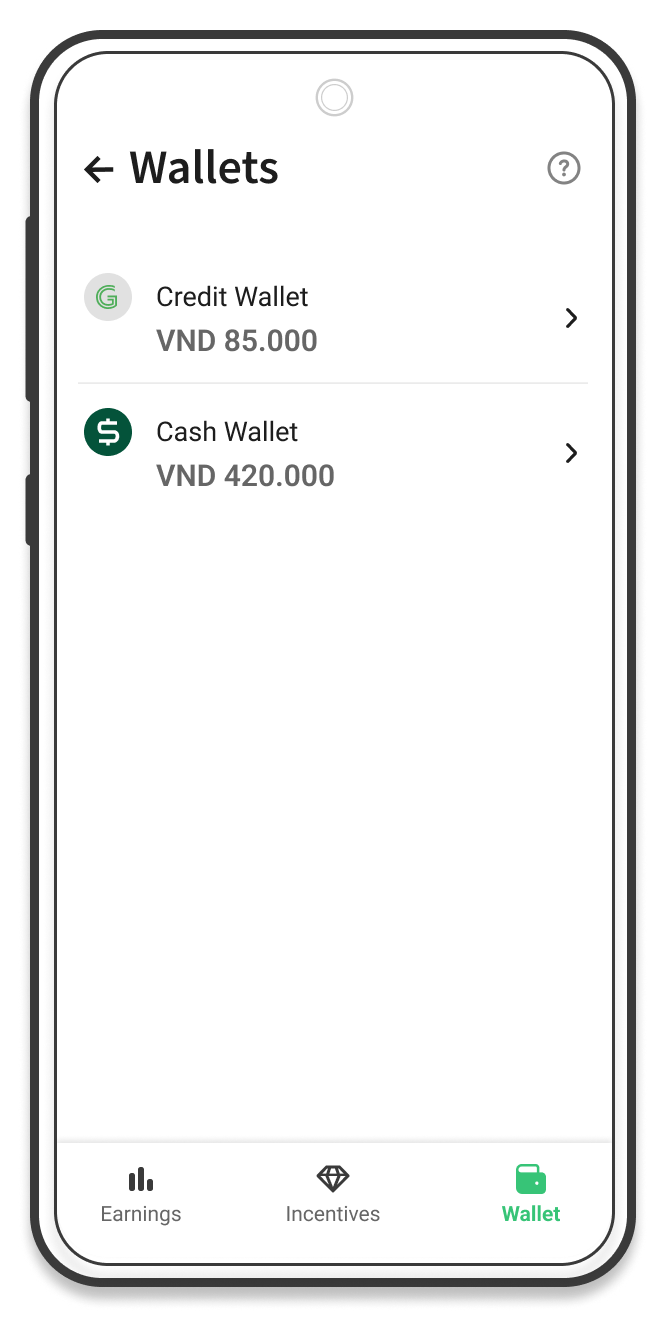
75% of users were assigned to the test group, which included a ‘Connect Moca’ banner and tag, while the remaining 25% formed the control group and experienced the existing wallet UI.
Strategic Allocation
While a 50/50 split is traditional, we allocated 75% to the variant because the integration was already approved by the State Bank of Vietnam (SBV). This allowed us to treat the rollout as a low-risk experiment to accelerate confidence and gather data at scale quickly.
Success Metrics
We specifically tracked wallet link rates, the frequency of Driver-to-Moca transfers (MAU), and Total Payment Volume (TPV).
Solution
Transforming Driver Wallets into Active Financial Gateways
The final integration transformed the driver’s earnings mechanism from a passive payout channel into an active financial gateway, establishing a secure and compliant pathway for total financial access. By bridging the Grab and Moca ecosystems, we created a "closed-loop" value system where drivers can manage their entire financial life without leaving the platform
Instant Cash-Out
Drivers can now link their Moca Wallet directly to their Cash Wallet and transfer earnings in seconds, completely removing the traditional 1–2 day bank wait that previously hindered their liquidity.
Full Access to Financial Services
By moving into Moca’s regulated framework, drivers became eligible for essential Grab Financial Services such as loans, insurance, and PayLater, that were previously inaccessible due to the unregulated nature of the internal Cash Wallet.
Seamless Digital Payments
Drivers gained the ability to use their Grab earnings instantly for bill payments, airtime top-ups, and both online and offline purchases.
Ecosystem Retention
This integration ensures that driver spending circulates within Grab, generating recurring value for the business instead of leaking to external banks and wallets.
Implementation Components
Trust-based UI
Following insights from our usability testing, the final interface prominently featured bank branding and "protected information" messaging to reinforce the security of the regulated Moca ecosystem.
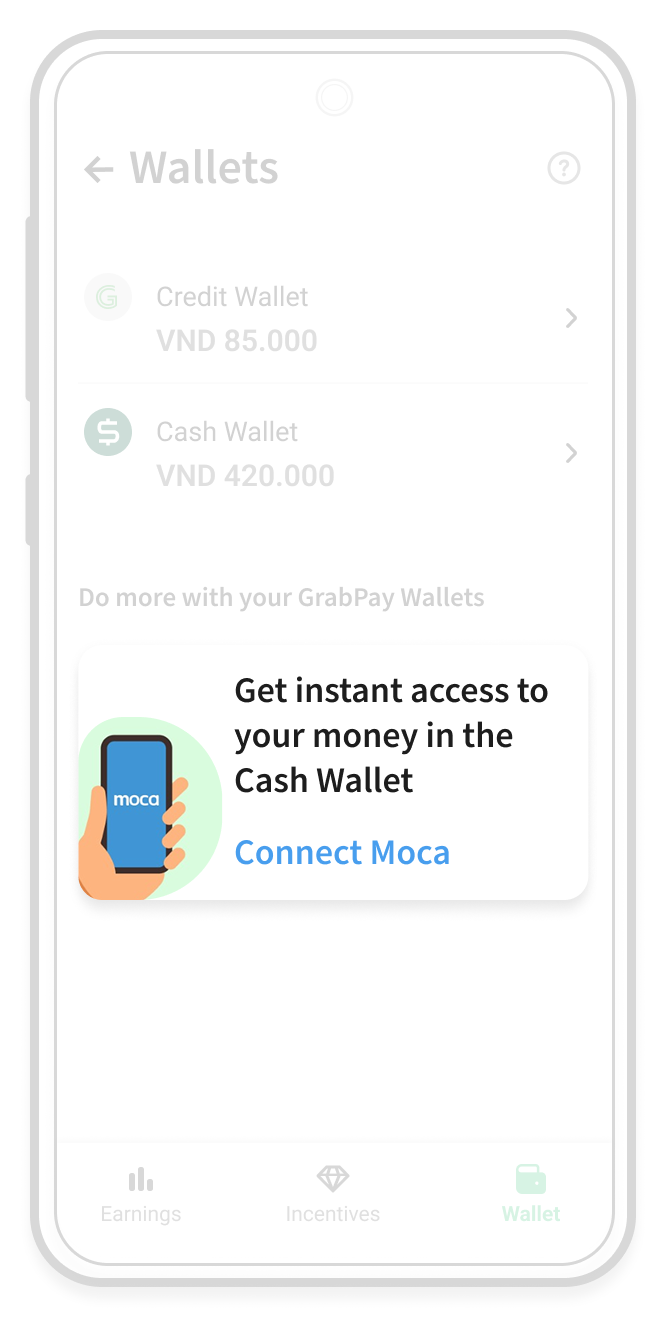
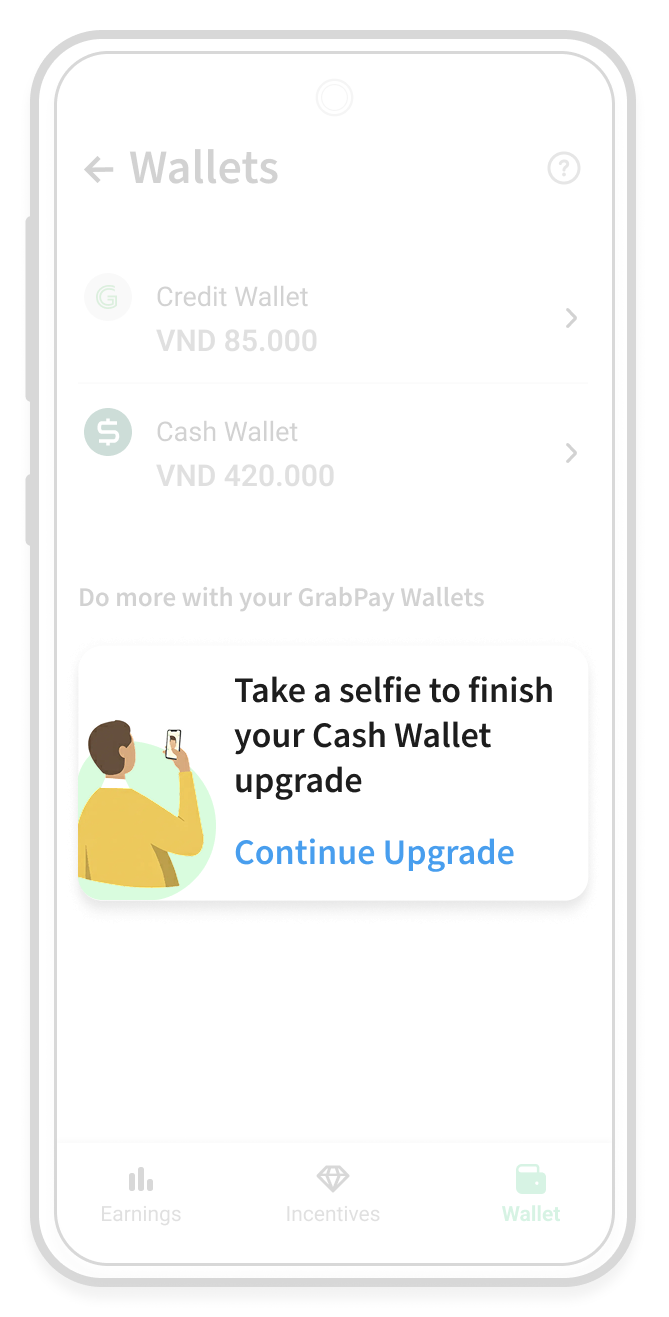
Wallet Integration States Cards
To guide drivers through the new integration, we designed contextual cards within the Driver Services section of the wallet.
Action Triggers
These cards functioned as the primary entry point to start the linking process and served as reminders for drivers who dropped off during the flow.
Moca Activation/
Start
Moca Activation/
Continue
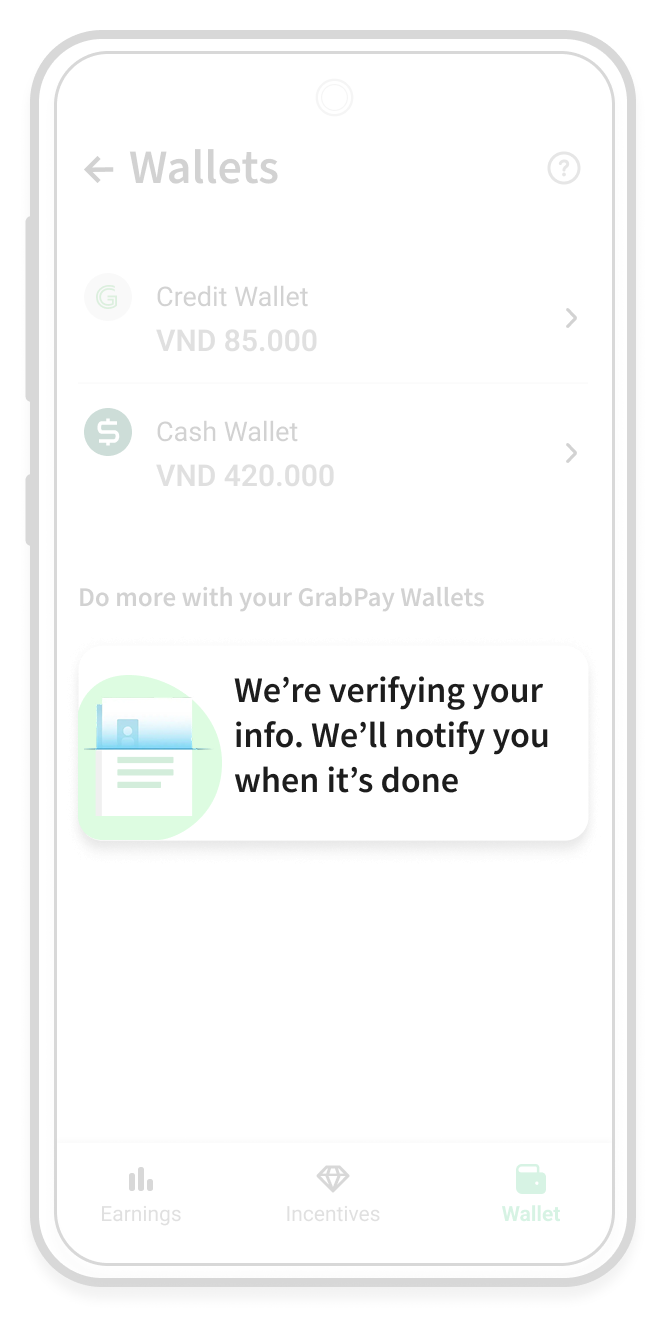
Live Status
The status cards provided transparency during the critical KYC/CDD verification stage, keeping drivers informed with real-time updates such as 'Pending Review' or 'Completed'.
Pending Review
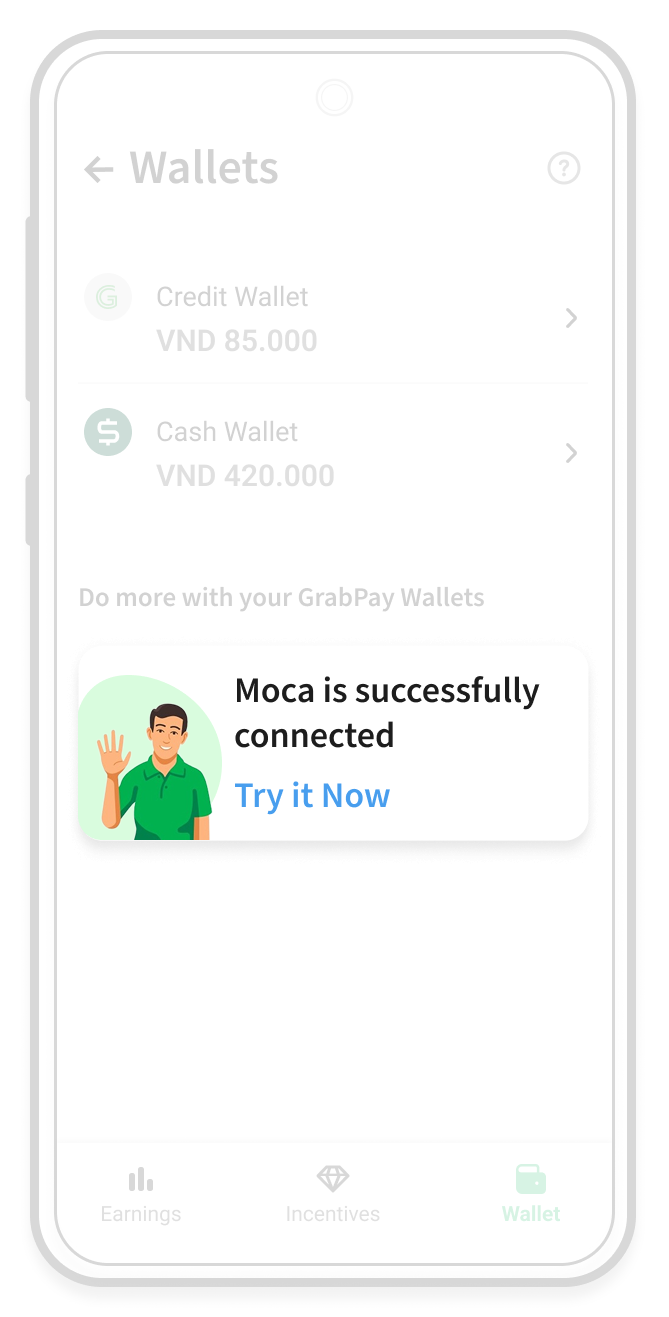
Completed
Outcome & Impact
Delivering Growth and Establishing a Repeatable Foundation for Financial Services
The integration delivered measurable business growth and created a new foundation for Grab’s financial ecosystem in Vietnam. By transforming the driver wallet into a financial tool, moving beyond mere payouts to driving deeper ecosystem engagement.

30%
Wallet Activation From A/B Experiment
A large-scale two months A/B test with 160,000 drivers drove a 30% uplift in wallet activations.
28%
Wallet Activation in the First 6 Months
Over a quarter of the Vietnam driver fleet linked their Moca Wallet, enabling cash-outs and platform-based earnings management.

5M
Total Annual Driver Payment Volume
23,000 drivers cashed out monthly via the platform, totaling $5M in TPV.
63K
Recurring Revenue From Transaction Fees
New revenue stream generated through wallet-based payments after integration.
580K
Lending Revenue
Revenue generated from loan products based on driver earnings data.
32K
Insurance Revenue
Custom insurance offerings created a new monetization stream for the driver segment.

Ecosystem Retention
New revenue stream generated through wallet-based payments after integration.

Scalable Playbook
Revenue generated from loan products based on driver earnings data.
Reflection
Designing for Trust, Scale and Measurable Impact
This project demonstrated how successful financial services can be built within real-world constraints by achieving alignment between user needs, compliance requirements, and core business goals for mutual benefit
Key Learnings
Simplicity Wins Adoption
Drivers don’t care about our “ecosystem value“, they care about instant access to their hard earned money and potential financial services. By positioning the product around speed and control, we created natural demand and accelerated adoption across the fleet.
Constraints Fuel Clarity
Working under strict data and licensing rules forced us to design and communicate with maximum transparency. This focus on clarity, using straightforward language and clear progress indicators resulted in a clean and trusted user experience.
Partnership Drives Progress
Moving away from a siloed approach was critical. The ability to co-create with Compliance and Legal teams from the project’s inception transformed regulatory challenges into enablers, accelerating approvals and allowing us to deliver the solution with stronger confidence.
For confidentiality and to comply with my non-disclosure agreement, specific values and certain confidential information have been left out or adjusted in this case study. The perspectives and insights shared here are based on my personal involvement and interpretation of the project's outcomes and do not necessarily represent Grab's official stance
Moca Wallet Integration
A compliant, scalable integration for Vietnam’s drivers between Grab’s Cash Wallet and Moca Wallet.
8 min read • 2021
Context
Financial Inclusion and Faster Access to Earnings
As a Product Designer for the Wallet Platform within the Grab Finance Group, I led the design efforts to enable drivers in Vietnam to link their Moca Wallet directly to their Grab Cash Wallet. This strategic project aimed to create a compliant and scalable integration designed to unlock instant cash-outs, seamless spending, and access to financial services for a fleet serving 2.2 million passengers each day.
Prior to this integration, driver earnings were effectively trapped in slow, manual cash-out cycles, where funds were held in non-regulated accounts that limited access to modern digital services
The Team
My Role
I served as the Lead Product Designer for the Wallet Platform team, overseeing the project from its inception through to the pilot and regional scaling phases. My role involved:
Cross-functional Leadership
Collaborating closely with Compliance, Legal, and Engineering teams to transform strict regulatory requirements into design enablers.
End-to-End Design
Designing the wallet activation flows for both existing and new Moca users, ensuring a frictionless transition into the regulated Moca ecosystem.
Validation
Directing controlled lab studies in Ho Chi Minh and overseeing a large-scale in-market A/B test with 160,000 drivers to prove the design's impact.
The Problem
Friction, Delays, and Missed Opportunities on Both Sides
The existing system presented significant friction and missed opportunities for both drivers and the Grab platform. Prior to this integration, the driver wallet functioned merely as a passive payout channel rather than an active financial gateway, limiting liquidity and engagement within the ecosystem
Trapped and Delayed Access to Earnings
Drivers received their earnings in Grab’s internal, non-regulated Cash Wallet. To access their money, they had to manually cash out to external bank accounts and wait for transfers to clear. As a result, 75% of drivers waited up to two days to receive their funds
Excluded from Financial Services
Because the Cash Wallet wasn’t a licensed financial instrument under the State Bank of Vietnam (SBV), Grab could not offer services, such as loans, insurance, and BNPL directly through them. This restricted drivers' access to credit and digital financial safety nets
Friction in Digital Payments
Drivers were unable to spend their earnings directly via Moca. Even for basic needs like airtime top-ups or bill payments, they were forced into an inconvenient manual top-up cycle from their bank accounts back into a digital wallet, creating a significant barrier to digital adoption
Earnings Leakage
Once earnings were cashed out to external banks, all subsequent revenue and engagement moved outside of the platform. Instead of generating recurring value within Grab’s ecosystem, this spending circulated externally, reducing driver loyalty and platform retention.
Goals
Unlocking Instant Liquidity and Financial Services Eligibility
The integration was designed to deliver immediate, measurable value to drivers while establishing a strong foundation for Grab’s financial ecosystem in Vietnam. The strategic intent was to transition driver wallets from passive payout channels into active financial gateways, improving liquidity and long-term engagement
Customer Value Proposition (CVP)
Making Driver Earnings Fast, Flexible, and Rewarding
Instant Liquidity
Deliver near-instant transfers from the Driver Wallet to Moca, eliminating the traditional 1–2 day bank wait that previously hindered driver cash flow.
Access to Financial Services
Enable drivers to link or create a (regulated) Moca Wallet directly in-app, granting them compliant access to Grab Financial Services including loans, insurance, and PayLater.
Seamless Payments & Rewards
Allow drivers to use their hard-earned money immediately for online and offline purchases, bill payments, and airtime top-ups, while earning GrabRewards on every transaction.
Business & Product Objectives
Increase Activation & TPV
Driving wallet link rates, cash-outs transactions, and the Total Payment Volume (TPV) through Moca-integrated payment options.
Ecosystem Retention (Closed-Loop Value)
Strategically retain driver spending within the Grab ecosystem to generate recurring value and reduce "earnings leakage" to external banks.
Validation
Establish a secure, scalable integration model approved by the State Bank of Vietnam (SBV) that could serve as a for other regulated markets, such as Indonesia.
Process & Approach
Designing Within Bounds: Driving Instant Payouts through Strategic Internal Transfers
This project sat in a heavily regulated space, so compliance wasn’t something we could “design around.” Instead of treating regulation as a blocker, we treated it as a given constraint and designed within it from day one.
That meant focusing early on clarity, predictability, and validation with real users. By being explicit about what was allowed, what wasn’t, and why, we were able to reduce uncertainty and build trust, both with users and internal stakeholders. In the end, regulation didn’t just shape the solution; it helped us create a more reliable and trustworthy product.
Enabling the Integration
Partnership as an Enabler
Early and constant collaboration with Compliance and Legal teams was essential. By co-creating the integration from the start, we transformed traditional regulatory challenges into enablers, which significantly accelerated internal approvals.
Regulatory Positioning
To ensure a secure and compliant launch, the integration was positioned as an internal transfer within the licensed Grab–Moca ecosystem (treating them as one licensed entity). This strategy allowed the State Bank of Vietnam (SBV) to approve the project as a low-risk pilot that directly supported the national initiative to transition from cash to digital payments
Compliance-Led Consent Design
We worked closely with Data Privacy teams to design a consent flow fully aligned with local data protection regulations. We explored multiple options for each step of the onboarding process to balance strict legal requirements with the need to minimize friction for the driver.
Option A
Drivers are required to actively review and accept the Terms & Conditions before proceeding. This approach ensures explicit, informed consent, but introduces additional friction that can impact activation rates.
Option B
The T&C checkbox is pre-selected, allowing drivers to proceed faster while still surfacing consent clearly. This balances regulatory compliance with reduced friction, improving completion without fully removing user acknowledgment.
Option C
Consent is embedded directly into the “Connect Now” action, with Terms & Conditions referenced inline. Minimizing friction maximizes conversion, but consent is no longer explicitly confirmed.
Design Principles
Transparent by Design
Trust is the foundation of any financial product. We used straightforward language, clear progress indicators, and transparent updates on verification steps to ensure drivers felt informed and confident that their information was protected at every stage.
Frictionless for All
High adoption rates begin with simplicity. We focused on reducing cognitive load by eliminating unnecessary decisions and guiding drivers through the linking process with an intuitive, effortless flow regardless of their prior experience with digital wallets.
Adaptive Systems
We didn't just design for Vietnam; we designed for the region. By creating modular interaction patterns, we ensured the core experience remained consistent while allowing the system to adapt to the unique local regulations and partner needs of other markets, such as Indonesia
Frictionless Onboarding: Simplifying Complex Compliance
To address the diverse needs of the driver fleet, I designed detailed integration flows for two primary user states, ensuring that complex KYC (Know Your Customer) and CDD (Customer Due Diligence) requirements were met with minimal friction
Existing Moca Customers
Drivers who already held full KYC status, were guided through a streamlined flow focussing on legal consent and security. This included accepting updated T&Cs, verifying their phone number via OTP, and providing final consent to link the accounts.
New Moca Customers
For new Moca users, the flow acted as a bridge to the regulated ecosystem. To reduce manual entry, we prefilled the KYC form using existing driver data pulled from Grab’s User Service. After accepting T&Cs and verifying their phone number, drivers consented to the link and connected an ATM card to fund their new Moca account.
Validation
Usability Testing
Before launching, we conducted a controlled lab study in Ho Chi Minh, Vietnam, with 10 Grab Car and Bike drivers. To ensure high-quality insights, I observed sessions from a dedicated room with a simultaneous translator. The goal was to validate the clarity of the consent language and ensure the wallet-linking steps felt secure and predictable.
Key Findings & Iterations
Trust Through Branding
Drivers expressed significantly higher trust when flows featured bank branding and were reinforced by a "protected information" message.
Certainty Through Progress
The addition of a progress indicator was crucial. It made the multi-step linking process predictable, allowing drivers to estimate the effort required and reducing drop-off anxiety.
Clarity in Consent: Balancing Clarity With Compliance
In line with our “Transparent by Design” principle, we collaborated with Legal and Compliance to translate dense regulatory requirements into clear, human language. Making it easier for drivers to understand exactly what data they were sharing and why, turning a regulatory requirement into a moment of clarity and trust, rather than a source of confusion or friction.
In-Market Experimentation
To test the design’s impact on behavior, we ran an in-market A/B test with a stratified sample of 160,000 drivers over two months.
Test Group
Control Group
Experimental Design
75% of users were assigned to the test group, which included a ‘Connect Moca’ banner and tag, while the remaining 25% formed the control group and experienced the existing wallet UI.
Strategic Allocation
While a 50/50 split is traditional, we allocated 75% to the variant because the integration was already approved by the State Bank of Vietnam (SBV). This allowed us to treat the rollout as a low-risk experiment to accelerate confidence and gather data at scale quickly.
Success Metrics
We specifically tracked wallet link rates, the frequency of Driver-to-Moca transfers (MAU), and Total Payment Volume (TPV).
Solution
Transforming Driver Wallets into Active Financial Gateways
The final integration transformed the driver’s earnings mechanism from a passive payout channel into an active financial gateway, establishing a secure and compliant pathway for total financial access. By bridging the Grab and Moca ecosystems, we created a "closed-loop" value system where drivers can manage their entire financial life without leaving the platform
Instant Cash-Out
Drivers can now link their Moca Wallet directly to their Cash Wallet and transfer earnings in seconds, completely removing the traditional 1–2 day bank wait that previously hindered their liquidity.
Full Access to Financial Services
By moving into Moca’s regulated framework, drivers became eligible for essential Grab Financial Services such as loans, insurance, and PayLater, that were previously inaccessible due to the unregulated nature of the internal Cash Wallet.
Seamless Digital Payments
Drivers gained the ability to use their Grab earnings instantly for bill payments, airtime top-ups, and both online and offline purchases.
Ecosystem Retention
This integration ensures that driver spending circulates within Grab, generating recurring value for the business instead of leaking to external banks and wallets.
Implementation Components
Trust-based UI
Following insights from our usability testing, the final interface prominently featured bank branding and "protected information" messaging to reinforce the security of the regulated Moca ecosystem.
Wallet Integration States Cards
To guide drivers through the new integration, we designed contextual cards within the Driver Services section of the wallet.
Action Triggers
These cards functioned as the primary entry point to start the linking process and served as reminders for drivers who dropped off during the flow.
Moca Activation/ Start
Moca Activation/ Continue
Live Status
The status cards provided transparency during the critical KYC/CDD verification stage, keeping drivers informed with real-time updates such as 'Pending Review' or 'Completed'.
Pending Review
Completed
Outcome & Impact
Delivering Growth and Establishing a Repeatable Foundation for Financial Services
The integration delivered measurable business growth and created a new foundation for Grab’s financial ecosystem in Vietnam. By transforming the driver wallet into a financial tool, moving beyond mere payouts to driving deeper ecosystem engagement.
30%
Wallet Activation
From A/B Experiment
A large-scale two months A/B test with 160,000 drivers drove a 30% uplift in wallet activations.
28%
Wallet Activation
in the First 6 Months
Over a quarter of the Vietnam driver fleet linked their Moca Wallet, enabling cash-outs and platform-based earnings management.
5M
Total Annual Driver
Payment Volume
23,000 drivers cashed out monthly via the platform, totaling $5M in TPV.
63K
Recurring Revenue From Transaction Fees
New revenue stream generated through wallet-based payments after integration.
580K
Lending Revenue
Revenue generated from loan products based on driver earnings data.
32K
Insurance Revenue
Custom insurance offerings created a new monetization stream for the driver segment.
Ecosystem Retention
New revenue stream generated through wallet-based payments after integration.
Scalable Playbook
Revenue generated from loan products based on driver earnings data.
Reflection
Designing for Trust, Scale and Measurable Impact
This project demonstrated how successful financial services can be built within real-world constraints by achieving alignment between user needs, compliance requirements, and core business goals for mutual benefit
Key Learnings
Simplicity Wins Adoption
Drivers don’t care about our “ecosystem value“, they care about instant access to their hard earned money and potential financial services. By positioning the product around speed and control, we created natural demand and accelerated adoption across the fleet.
Constraints Fuel Clarity
Working under strict data and licensing rules forced us to design and communicate with maximum transparency. This focus on clarity, using straightforward language and clear progress indicators resulted in a clean and trusted user experience.
Partnership Drives Progress
Moving away from a siloed approach was critical. The ability to co-create with Compliance and Legal teams from the project’s inception transformed regulatory challenges into enablers, accelerating approvals and allowing us to deliver the solution with stronger confidence.
For confidentiality and to comply with my non-disclosure agreement, specific values and certain confidential information have been left out or adjusted in this case study. The perspectives and insights shared here are based on my personal involvement and interpretation of the project's outcomes and do not necessarily represent Grab's official stance
Moca Wallet Integration
A compliant, scalable integration for Vietnam’s drivers between Grab’s Cash Wallet and Moca Wallet.
8 min read • 2021
Context
Financial Inclusion and Faster Access to Earnings
As a Product Designer for the Wallet Platform within the Grab Finance Group, I led the design efforts to enable drivers in Vietnam to link their Moca Wallet directly to their Grab Cash Wallet. This strategic project aimed to create a compliant and scalable integration designed to unlock instant cash-outs, seamless spending, and access to financial services for a fleet serving 2.2 million passengers each day.
Prior to this integration, driver earnings were effectively trapped in slow, manual cash-out cycles, where funds were held in non-regulated accounts that limited access to modern digital services
The Team
My Role
I served as the Lead Product Designer for the Wallet Platform team, overseeing the project from its inception through to the pilot and regional scaling phases. My role involved:
Cross-functional Leadership
Collaborating closely with Compliance, Legal, and Engineering teams to transform strict regulatory requirements into design enablers.
End-to-End Design
Designing the wallet activation flows for both existing and new Moca users, ensuring a frictionless transition into the regulated Moca ecosystem.
Validation
Directing controlled lab studies in Ho Chi Minh and overseeing a large-scale in-market A/B test with 160,000 drivers to prove the design's impact.
The Problem
Friction, Delays, and Missed Opportunities on Both Sides
The existing system presented significant friction and missed opportunities for both drivers and the Grab platform. Prior to this integration, the driver wallet functioned merely as a passive payout channel rather than an active financial gateway, limiting liquidity and engagement within the ecosystem
Trapped and Delayed Access to Earnings
Drivers received their earnings in Grab’s internal, non-regulated Cash Wallet. To access their money, they had to manually cash out to external bank accounts and wait for transfers to clear. As a result, 75% of drivers waited up to two days to receive their funds
Excluded from Financial Services
Because the Cash Wallet wasn’t a licensed financial instrument under the State Bank of Vietnam (SBV), Grab could not offer services, such as loans, insurance, and BNPL directly through them. This restricted drivers' access to credit and digital financial safety nets
Friction in Digital Payments
Drivers were unable to spend their earnings directly via Moca. Even for basic needs like airtime top-ups or bill payments, they were forced into an inconvenient manual top-up cycle from their bank accounts back into a digital wallet, creating a significant barrier to digital adoption
Earnings Leakage
Once earnings were cashed out to external banks, all subsequent revenue and engagement moved outside of the platform. Instead of generating recurring value within Grab’s ecosystem, this spending circulated externally, reducing driver loyalty and platform retention.
Goals
Unlocking Instant Liquidity and Financial Services Eligibility
The integration was designed to deliver immediate, measurable value to drivers while establishing a strong foundation for Grab’s financial ecosystem in Vietnam. The strategic intent was to transition driver wallets from passive payout channels into active financial gateways, improving liquidity and long-term engagement
Customer Value Proposition (CVP)
Making Driver Earnings Fast, Flexible, and Rewarding
Instant Liquidity
Deliver near-instant transfers from the Driver Wallet to Moca, eliminating the traditional 1–2 day bank wait that previously hindered driver cash flow.
Access to Financial Services
Enable drivers to link or create a (regulated) Moca Wallet directly in-app, granting them compliant access to Grab Financial Services including loans, insurance, and PayLater.
Seamless Payments & Rewards
Allow drivers to use their hard-earned money immediately for online and offline purchases, bill payments, and airtime top-ups, while earning GrabRewards on every transaction.
Business & Product Objectives
Increase Activation & TPV
Driving wallet link rates, cash-outs transactions, and the Total Payment Volume (TPV) through Moca-integrated payment options.
Ecosystem Retention (Closed-Loop Value)
Strategically retain driver spending within the Grab ecosystem to generate recurring value and reduce "earnings leakage" to external banks.
Validation
Establish a secure, scalable integration model approved by the State Bank of Vietnam (SBV) that could serve as a for other regulated markets, such as Indonesia.
Process & Approach
Designing Within Bounds: Driving Instant Payouts through Strategic Internal Transfers
This project sat in a heavily regulated space, so compliance wasn’t something we could “design around.” Instead of treating regulation as a blocker, we treated it as a given constraint and designed within it from day one.
That meant focusing early on clarity, predictability, and validation with real users. By being explicit about what was allowed, what wasn’t, and why, we were able to reduce uncertainty and build trust, both with users and internal stakeholders. In the end, regulation didn’t just shape the solution; it helped us create a more reliable and trustworthy product.
Enabling the Integration
Partnership as an Enabler
Early and constant collaboration with Compliance and Legal teams was essential. By co-creating the integration from the start, we transformed traditional regulatory challenges into enablers, which significantly accelerated internal approvals.
Regulatory Positioning
To ensure a secure and compliant launch, the integration was positioned as an internal transfer within the licensed Grab–Moca ecosystem (treating them as one licensed entity). This strategy allowed the State Bank of Vietnam (SBV) to approve the project as a low-risk pilot that directly supported the national initiative to transition from cash to digital payments
Compliance-Led Consent Design
We worked closely with Data Privacy teams to design a consent flow fully aligned with local data protection regulations. We explored multiple options for each step of the onboarding process to balance strict legal requirements with the need to minimize friction for the driver.
Option A
Drivers are required to actively review and accept the Terms & Conditions before proceeding. This approach ensures explicit, informed consent, but introduces additional friction that can impact activation rates.
Option B
The T&C checkbox is pre-selected, allowing drivers to proceed faster while still surfacing consent clearly. This balances regulatory compliance with reduced friction, improving completion without fully removing user acknowledgment.
Option C
Consent is embedded directly into the “Connect Now” action, with Terms & Conditions referenced inline. Minimizing friction maximizes conversion, but consent is no longer explicitly confirmed.
Design Principles
Transparent by Design
Trust is the foundation of any financial product. We used straightforward language, clear progress indicators, and transparent updates on verification steps to ensure drivers felt informed and confident that their information was protected at every stage.
Frictionless for All
High adoption rates begin with simplicity. We focused on reducing cognitive load by eliminating unnecessary decisions and guiding drivers through the linking process with an intuitive, effortless flow regardless of their prior experience with digital wallets.
Adaptive Systems
We didn't just design for Vietnam; we designed for the region. By creating modular interaction patterns, we ensured the core experience remained consistent while allowing the system to adapt to the unique local regulations and partner needs of other markets, such as Indonesia
Frictionless Onboarding: Simplifying Complex Compliance
To address the diverse needs of the driver fleet, I designed detailed integration flows for two primary user states, ensuring that complex KYC (Know Your Customer) and CDD (Customer Due Diligence) requirements were met with minimal friction
Existing Moca Customers
Drivers who already held full KYC status, were guided through a streamlined flow focussing on legal consent and security. This included accepting updated T&Cs, verifying their phone number via OTP, and providing final consent to link the accounts.
New Moca Customers
For new Moca users, the flow acted as a bridge to the regulated ecosystem. To reduce manual entry, we prefilled the KYC form using existing driver data pulled from Grab’s User Service. After accepting T&Cs and verifying their phone number, drivers consented to the link and connected an ATM card to fund their new Moca account.
Validation
Usability Testing
Before launching, we conducted a controlled lab study in Ho Chi Minh, Vietnam, with 10 Grab Car and Bike drivers. To ensure high-quality insights, I observed sessions from a dedicated room with a simultaneous translator. The goal was to validate the clarity of the consent language and ensure the wallet-linking steps felt secure and predictable.
Key Findings & Iterations
Trust Through Branding
Drivers expressed significantly higher trust when flows featured bank branding and were reinforced by a "protected information" message.
Certainty Through Progress
The addition of a progress indicator was crucial. It made the multi-step linking process predictable, allowing drivers to estimate the effort required and reducing drop-off anxiety.
Clarity in Consent: Balancing Clarity With Compliance
In line with our “Transparent by Design” principle, we collaborated with Legal and Compliance to translate dense regulatory requirements into clear, human language. Making it easier for drivers to understand exactly what data they were sharing and why, turning a regulatory requirement into a moment of clarity and trust, rather than a source of confusion or friction.
In-Market Experimentation
To test the design’s impact on behavior, we ran an in-market A/B test with a stratified sample of 160,000 drivers over two months.
Test Group
Control Group
Experimental Design
75% of users were assigned to the test group, which included a ‘Connect Moca’ banner and tag, while the remaining 25% formed the control group and experienced the existing wallet UI.
Strategic Allocation
While a 50/50 split is traditional, we allocated 75% to the variant because the integration was already approved by the State Bank of Vietnam (SBV). This allowed us to treat the rollout as a low-risk experiment to accelerate confidence and gather data at scale quickly.
Success Metrics
We specifically tracked wallet link rates, the frequency of Driver-to-Moca transfers (MAU), and Total Payment Volume (TPV).
Solution
Transforming Driver Wallets into Active Financial Gateways
The final integration transformed the driver’s earnings mechanism from a passive payout channel into an active financial gateway, establishing a secure and compliant pathway for total financial access. By bridging the Grab and Moca ecosystems, we created a "closed-loop" value system where drivers can manage their entire financial life without leaving the platform
Instant Cash-Out
Drivers can now link their Moca Wallet directly to their Cash Wallet and transfer earnings in seconds, completely removing the traditional 1–2 day bank wait that previously hindered their liquidity.
Full Access to Financial Services
By moving into Moca’s regulated framework, drivers became eligible for essential Grab Financial Services such as loans, insurance, and PayLater, that were previously inaccessible due to the unregulated nature of the internal Cash Wallet.
Seamless Digital Payments
Drivers gained the ability to use their Grab earnings instantly for bill payments, airtime top-ups, and both online and offline purchases.
Ecosystem Retention
This integration ensures that driver spending circulates within Grab, generating recurring value for the business instead of leaking to external banks and wallets.
Implementation Components
Trust-based UI
Following insights from our usability testing, the final interface prominently featured bank branding and "protected information" messaging to reinforce the security of the regulated Moca ecosystem.
Wallet Integration States Cards
To guide drivers through the new integration, we designed contextual cards within the Driver Services section of the wallet.
Action Triggers
These cards functioned as the primary entry point to start the linking process and served as reminders for drivers who dropped off during the flow.
Moca Activation/ Start
Moca Activation/ Continue
Live Status
The status cards provided transparency during the critical KYC/CDD verification stage, keeping drivers informed with real-time updates such as 'Pending Review' or 'Completed'.
Pending Review
Completed
Outcome & Impact
Delivering Growth and Establishing a Repeatable Foundation for Financial Services
The integration delivered measurable business growth and created a new foundation for Grab’s financial ecosystem in Vietnam. By transforming the driver wallet into a financial tool, moving beyond mere payouts to driving deeper ecosystem engagement.
30%
Wallet Activation From A/B Experiment
A large-scale two months A/B test with 160,000 drivers drove a 30% uplift in wallet activations.
28%
Wallet Activation in the First 6 Months
Over a quarter of the Vietnam driver fleet linked their Moca Wallet, enabling cash-outs and platform-based earnings management.
5M
Total Annual Driver Payment Volume
23,000 drivers cashed out monthly via the platform, totaling $5M in TPV.
63K
Recurring Revenue From Transaction Fees
New revenue stream generated through wallet-based payments after integration.
580K
Lending
Revenue
Revenue generated from loan products based on driver earnings data.
32K
InsuranceRevenue
Custom insurance offerings created a new monetization stream for the driver segment.
Ecosystem Retention
New revenue stream generated through wallet-based payments after integration.
Scalable Playbook
Revenue generated from loan products based on driver earnings data.
Reflection
Designing for Trust, Scale and Measurable Impact
This project demonstrated how successful financial services can be built within real-world constraints by achieving alignment between user needs, compliance requirements, and core business goals for mutual benefit
Key Learnings
Simplicity Wins Adoption
Drivers don’t care about our “ecosystem value“, they care about instant access to their hard earned money and potential financial services. By positioning the product around speed and control, we created natural demand and accelerated adoption across the fleet.
Constraints Fuel Clarity
Working under strict data and licensing rules forced us to design and communicate with maximum transparency. This focus on clarity, using straightforward language and clear progress indicators resulted in a clean and trusted user experience.
Partnership Drives Progress
Moving away from a siloed approach was critical. The ability to co-create with Compliance and Legal teams from the project’s inception transformed regulatory challenges into enablers, accelerating approvals and allowing us to deliver the solution with stronger confidence.
For confidentiality and to comply with my non-disclosure agreement, specific values and certain confidential information have been left out or adjusted in this case study. The perspectives and insights shared here are based on my personal involvement and interpretation of the project's outcomes and do not necessarily represent Grab's official stance